 Scan to add us
1. Why fibres need a matting agent
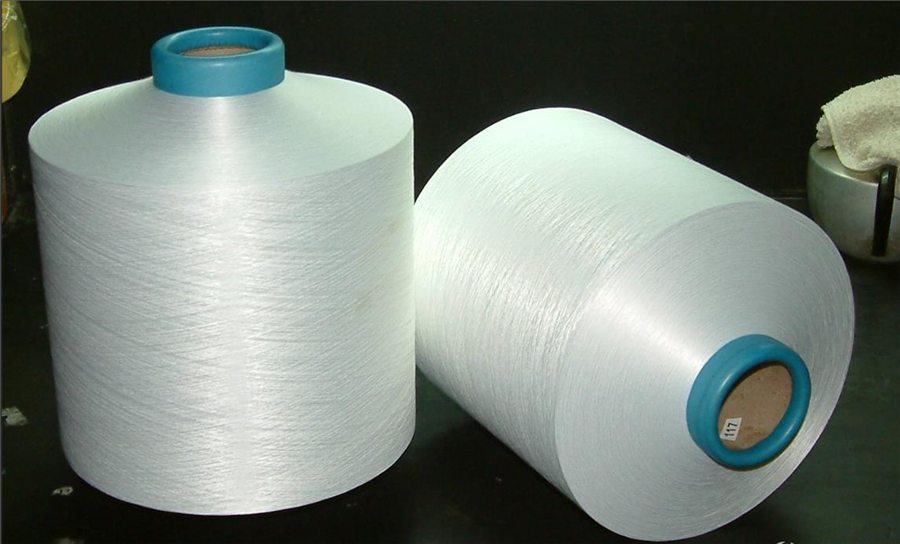
Chemical-fibre molecules are arranged in an orderly way, so the fibre surface is smooth and partly transparent. Under light the fibres produce a strong, unpleasant sheen (a “glittering” lustre). To make synthetic fibre resemble the soft, opaque look of natural fibre — without compromising its strength or elongation — a controlled amount of matting agent is added through the spinning process, yielding semi-dull or full-dull fibres.
2. Selection is critical
Fibre spinning is a complex process. Improper selection or use of titanium dioxide will affect both production stability and the final fibre performance. A comprehensive understanding of TiO₂ properties, quality requirements and applications is therefore essential to secure fibre quality and the required matting effect.
3. Why anatase for fibres
Titanium dioxide has a higher refractive index (anatase ≈ 2.55, rutile ≈ 2.71) than any other white pigment in common industrial use — calcium carbonate, zinc oxide and lithopone included — so it scatters visible light far more strongly and is by a wide margin the most effective delustrant. By crystal form, TiO₂ falls into three types — rutile, anatase and brookite — of which brookite is unstable and of no practical value. Both rutile and anatase are tetragonal, but rutile has a higher relative density and hardness; its greater particle hardness tends to wear spinneret holes and cutters. For this reason anatase TiO₂ is normally used as the matting agent for chemical fibres.
4. Dosing
Adding a TiO₂ matting agent not only delusters the fibre but also influences the fibre polymer, machine wear, filter-element service life, spinning end-breakage rate, and the fibres’ physical/mechanical properties. So the dosage should be tuned to the required dullness, not simply increased. Typical reference levels (TiO₂ on polymer) are:
- Semi-dull: about 0.2–0.3 %
- Full-dull: about 1.5–2.5 %
Actual loading depends on your polymer system, filament denier, lustre specification and line design, and should be confirmed by your own process trial.
Related grades: HA-600 / HA-700 (polyester), HA-800 (acrylic & viscose), HA-900 (nylon).